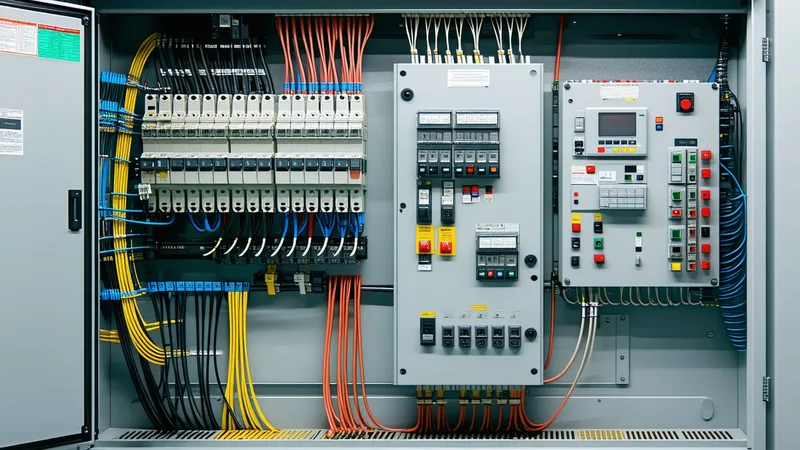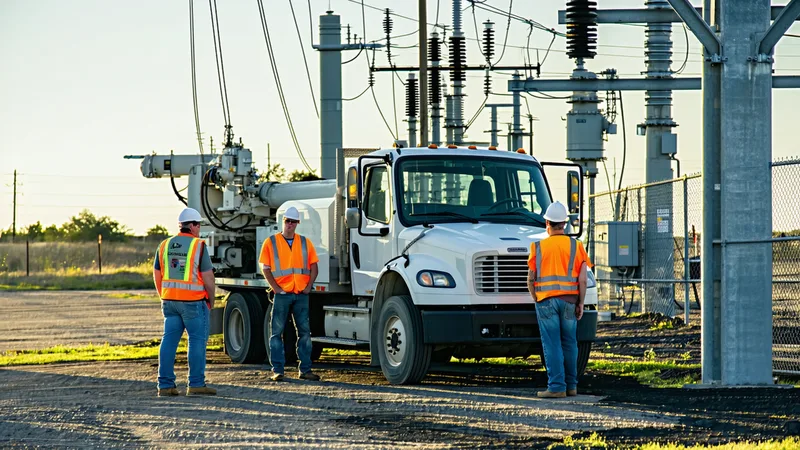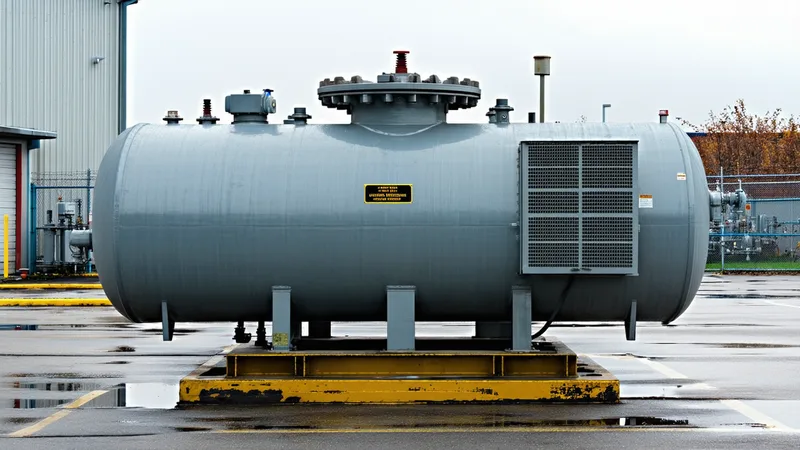
Step voltage regulators are often treated as relatively low-priority items in a distribution maintenance program — less glamorous than transformers, less frequently monitored than reclosers. That attitude is understandable given their simpler mechanical design compared to load tap changers (LTCs) on power transformers, but it underestimates the failure consequences. A failed tap-changer on a step regulator in a voltage-sensitive corridor can cause sustained voltage violations affecting dozens of customers before the problem is identified, and emergency replacement requires the same switching coordination and outage management as any other distribution equipment failure.
The good news is that tap-changer contact wear in step voltage regulators produces detectable signatures well before catastrophic contact failure. The signals are accessible with instrumentation that many regulators already carry or can be retrofitted with at low cost. Understanding what to look for — and how to interpret it in the context of normal regulator operation — is the operational challenge this article addresses.
How Tap-Changer Contact Wear Develops
Step voltage regulators adjust the turns ratio of the series winding by switching the shunt winding connection across successive tap positions. Each tap operation involves current interruption under load through the reversing switch and preventive autotransformer arrangement. The contacts make and break under full load current, and the primary wear mechanism is arc erosion of the contact surfaces — the same process that governs recloser contact wear, though at lower interrupting currents and shorter arcing times.
As contact surfaces erode over thousands of operations, contact resistance increases. The relationship between tap operation count and contact resistance is not linear: a fresh contact set shows minimal resistance, but resistance begins to rise measurably as the contact surface develops pitting and the silver or copper plating wears through to the substrate material. Once the contact is operating in the worn condition, resistance rise accelerates because the contact area is smaller and the arc energy per operation is higher (a higher-resistance contact dissipates more energy during the transition, which further accelerates erosion).
The thermal signature of this progression is the most reliable leading indicator of significant contact wear. A worn tap-changer contact dissipates more power as I²R heating during normal load current flow. This heating manifests as an elevated temperature in the regulator housing above what the transformer core and winding heating alone would produce at that load level.
Temperature as the Primary Signal
The most actionable monitoring signal for tap-changer wear is housing temperature, specifically the differential between measured housing temperature and the expected temperature at the observed load current. For a healthy regulator, the housing temperature at a given load current and ambient temperature is predictable — the transformer losses (core and winding) plus the ambient determine the steady-state temperature rise. A tap-changer with significantly elevated contact resistance adds a load-dependent thermal component on top of this baseline.
The detection approach requires two pieces of information: the regulator's load current (available from the regulator control's measurement channel, typically reported via DNP3) and the ambient temperature at or near the installation. With those two covariates, a baseline thermal model predicts the expected housing temperature. Deviations above that prediction — after accounting for the model's normal prediction uncertainty — represent excess heating that is attributable to electrical losses in the tap-changer mechanism.
The practical detection threshold for tap-changer condition is typically a persistent excess temperature of 8–15°C above the load-and-ambient prediction over a multi-day observation window. Single-point exceedances are noise; sustained elevation across multiple load cycles is signal. The multi-day window also filters out the effect of direct solar radiation on the regulator housing, which can produce transient temperature spikes that look like anomalies but are environmental.
Load-Current Transient Signatures During Tap Operations
A secondary signal, less commonly monitored but informative when available, is the load-current transient profile during tap change operations. As contacts wear, the duration and character of the current interruption transient changes. A healthy tap-changer transitions between tap positions with a brief, clean current interruption. A worn tap-changer may show a prolonged transition with higher peak transient current, reflecting either contact bounce during the make sequence or hesitation in the preventive autotransformer transition due to mechanical stiffness in the operating mechanism.
Capturing this signal requires higher sample-rate current measurement than the typical DNP3 polling interval provides — meaningful characterization of the tap operation transient requires at least 1-second resolution, and ideally higher, on the current waveform. Modern electronic regulator controls (Cooper Industries Mark V and later, Beckwith Electric M-6200 series, and similar) log tap operation event records that include current at operation time, which can be retrieved periodically and analyzed for trends in the operating current profile.
A Field Example
On a distribution feeder in a high-growth suburban corridor in southeast Texas in late 2024, Fieldiq monitoring data for a single-phase step regulator showed a sustained housing temperature anomaly — approximately 11°C above the load-temperature prediction — developing over a three-week period beginning in early October. The unit was a 14-year-old 66.7A-class regulator with approximately 18,000 recorded tap operations. Raw operation count alone placed it within the manufacturer's standard maintenance interval.
The thermal anomaly flag triggered an accelerated inspection. Physical inspection of the tap-changer contacts confirmed significant pitting on the main contacts and one reversing switch contact, with the silver contact plating worn through at the primary arcing zone. The preventive autotransformer oil showed acetylene at low but non-zero levels in a spot DGA sample — consistent with localized arcing at the contacts that would not yet have reached the alert threshold on a routine annual sample schedule.
The unit was scheduled for contact replacement during the next planned maintenance window, avoiding an unplanned failure event. The thermal signal provided approximately four to six weeks of advance warning ahead of what would likely have been a contact failure during the next peak-load period.
Tap Operation Count Alone Is Insufficient
Most regulator maintenance programs trigger inspection or contact replacement at a defined tap operation count — typically in the range of 50,000 to 100,000 operations depending on the manufacturer and the rated current of the unit. This is a reasonable heuristic for planning purposes, but it carries the same limitation as raw recloser operation counts: it does not account for the load current at which those operations occurred.
A regulator on a lightly loaded rural lateral accumulates 10,000 operations at low current levels with minimal per-operation arc energy. A regulator on a heavily loaded commercial feeder accumulates the same 10,000 operations at two to three times the current, with proportionally higher arc energy per operation and proportionally faster contact wear. The raw count is the same; the condition is materially different.
We are not suggesting that operation count thresholds should be abandoned — they provide a useful upper bound for maintenance planning. The argument is that thermal monitoring and current-weighted operation tracking give a more accurate picture of actual contact condition, allowing maintenance to be timed to condition rather than to a count threshold that may be too early for some units and dangerously late for others. In a large regulator fleet, condition-based maintenance timing reduces unnecessary maintenance on lightly used units while catching heavily used units that reach their wear limit before the count threshold fires.
Sensor Placement and Data Requirements
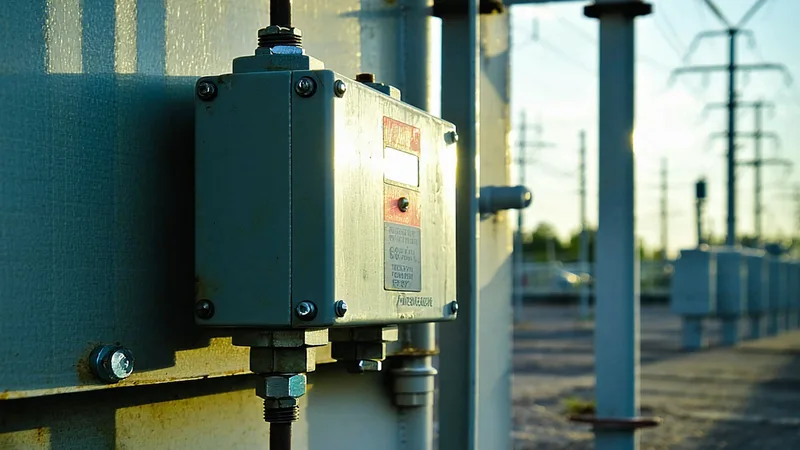
For temperature monitoring, the sensor placement that most reliably captures tap-changer heating is on the regulator housing near the tap-changer mechanism, which is typically the upper portion of the housing on a conventional step regulator design. Mounting the temperature sensor on the tank surface opposite the series winding — where transformer core heating is the dominant source — will show a temperature profile dominated by transformer losses rather than tap-changer losses, reducing sensitivity to the contact wear signal.
For load current, the regulator controller's existing current measurement is sufficient — it does not require an additional current sensor. The critical integration requirement is retrieving the current reading with sufficient time resolution (at minimum 15-minute averages, hourly at maximum) to build a useful thermal model. The thermal time constant of the regulator housing is on the order of 30–90 minutes, so sub-15-minute current readings do not add material value to the thermal model but do add data volume.
The combination of a surface-mounted temperature logger and the existing regulator controller current telemetry provides the inputs needed for tap-changer wear monitoring at a hardware cost that is modest relative to the cost of emergency contact replacement and the associated outage management.