Line Recloser wear modeling beyond operation count
Operation-count thresholds are a blunt instrument for recloser maintenance. Fieldiq incorporates load magnitude at each operation and ambient temperature to compute actual contact wear accumulation — not just a tally.
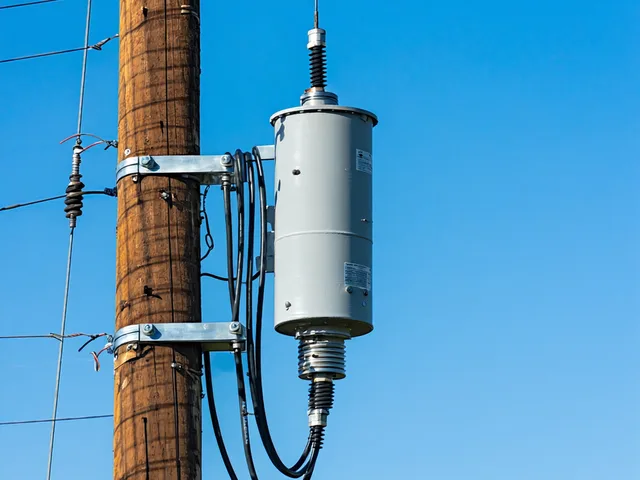
The problem with operation-count maintenance
Most utility maintenance programs trigger recloser servicing at fixed operation counts — typically 2,000 or 5,000 operations. But two reclosers can reach the same count with very different actual contact wear, depending on whether they operated at 100A or 800A each time.
-
Load-weighted operation counting
Each recloser operation is weighted by the fault current interrupted. High-current operations cause disproportionately more contact erosion than low-current operations at the same count.
-
Ambient temperature context
Contact resistance changes with temperature. Ambient temperature at the time of operation is incorporated into the wear model to account for the effect on arc energy and contact material behavior.
-
Mechanical timing and trip-speed monitoring
For IED-equipped reclosers, Fieldiq monitors operating time (close-to-latch, trip-to-open) against manufacturer specifications. Timing drift is an early indicator of mechanical wear in the trip mechanism.
-
Vacuum interrupter health estimation
For vacuum-type reclosers, the model tracks cumulative erosion against dielectric withstand envelope — providing an estimated remaining service life before required dielectric testing or replacement.
Supported recloser configurations
| Parameter | Supported range |
|---|---|
| Phase configuration | Single-phase, three-phase |
| Interrupter type | Vacuum, oil-type |
| Telemetry source | IED DNP3 output, external operation counter + load CT |
| Monitored signals | Operation count, fault current per operation, contact temp, trip timing |
Shift recloser maintenance to condition-based triggers
A large electric cooperative with 1,400 miles of distribution line across three Texas counties is using Fieldiq's recloser wear model to extend maintenance intervals on low-wear units and prioritize high-wear ones.